YOUR NEXT DISCOVERY/ArtifactsFollow your curiosity
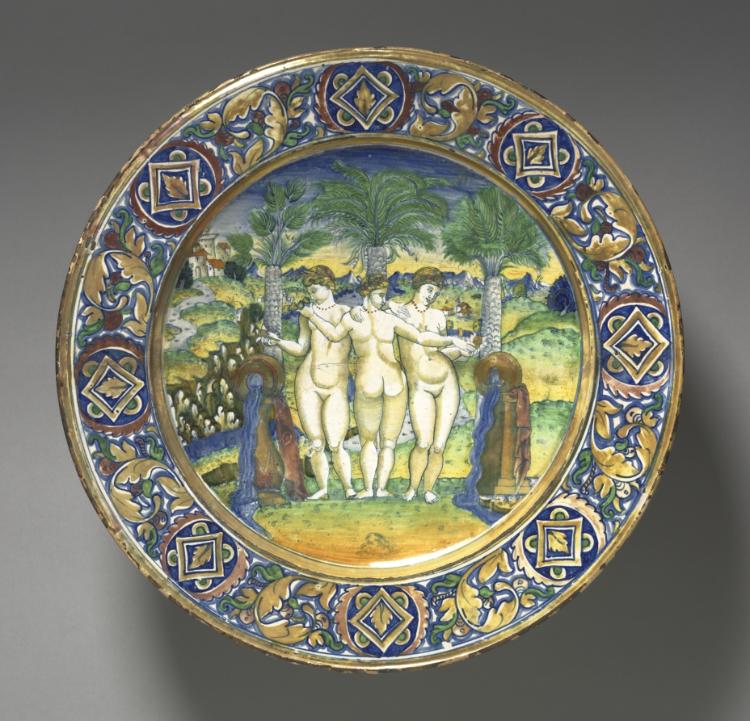
Charger Depicting the Three Graces, from The Cleveland Museum of Art
The Cleveland Museum of Art · Open Access · Reuse terms

Italy, Urbino region, Gubbio, 16th century / c. 1525

Charger Depicting the Three Graces

Charger Depicting the Three Graces

The Cleveland Museum of Art catalogs Charger Depicting the Three Graces as ceramic (Italy, Urbino region, Gubbio, 16th century · c. 1525).

In Greek mythology, the three graces represent the daughters of Zeus who embodied charm, beauty, and creativity.

SERENDIPITYA little unexpected
FamiliarWeird

The museum identifies this ceramic as tin-glazed earthenware with gold lustre (maiolica) and credits Maestro Giorgio Andreoli (Italian, 1465?–1553).

The museum's collection notes: During the Renaissance, an understanding of classical antiquity was perceived to be a sign of social, intellectual, and economic distinction. Scenes from Greco-Roman mythology were prominently featured on maiolica, covering the surface in a style called istoriato (decorated with stories). This depiction of the three graces was likely based on an engraving by the Renaissance printmaker, Marcantonio Raimondi.

The Cleveland Museum of ArtCharger Depicting the Three Graces

Original explanation based on the sources above. Images carry their own reuse terms.