A CLOSER LOOK
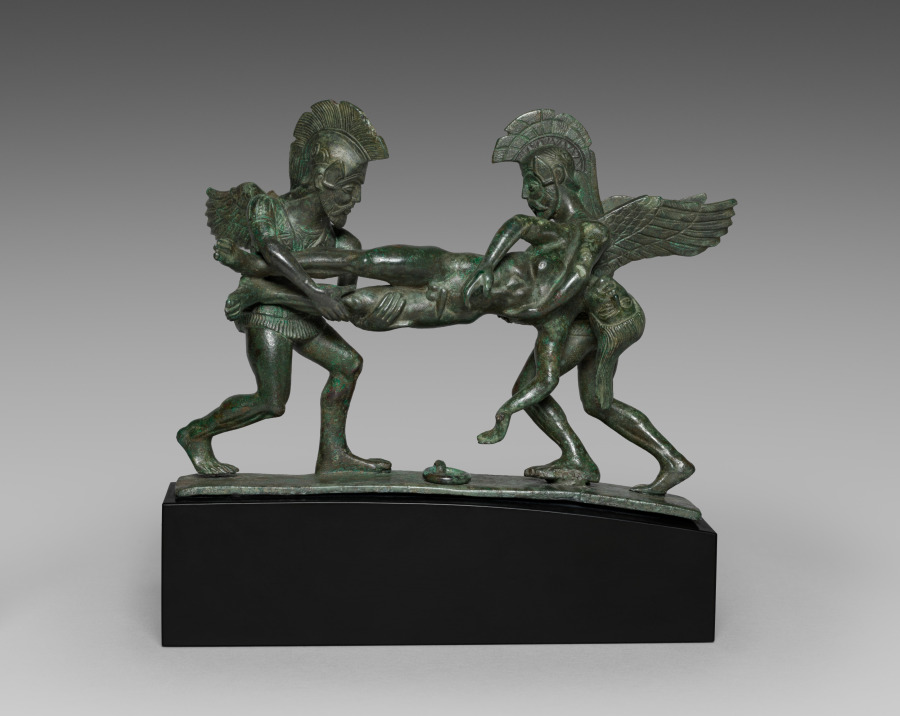
The museum identifies this sculpture as bronze.
The museum's collection notes: Designed for attachment to the lid of a large bronze cista , a cylindrical lidded box, these three figures probably represent Sleep (Hypnos) and Death (Thanatos) holding the body of Sarpedon. A son of Zeus who helped to defend Troy from invading Greek forces, "godlike Sarpedon of the brazen helmet" fell at the hands of Patroclus, as told by Homer in Book XVI of the Iliad . Apollo then intervened to protect the body, removing it from danger and entrusting it to the two winged deities, as depicted here and in a number of other ancient artworks, Greek and Etruscan alike. If not Sarpedon, the fallen warrior could be Memnon, the son of Eos and Tit