A CLOSER LOOK
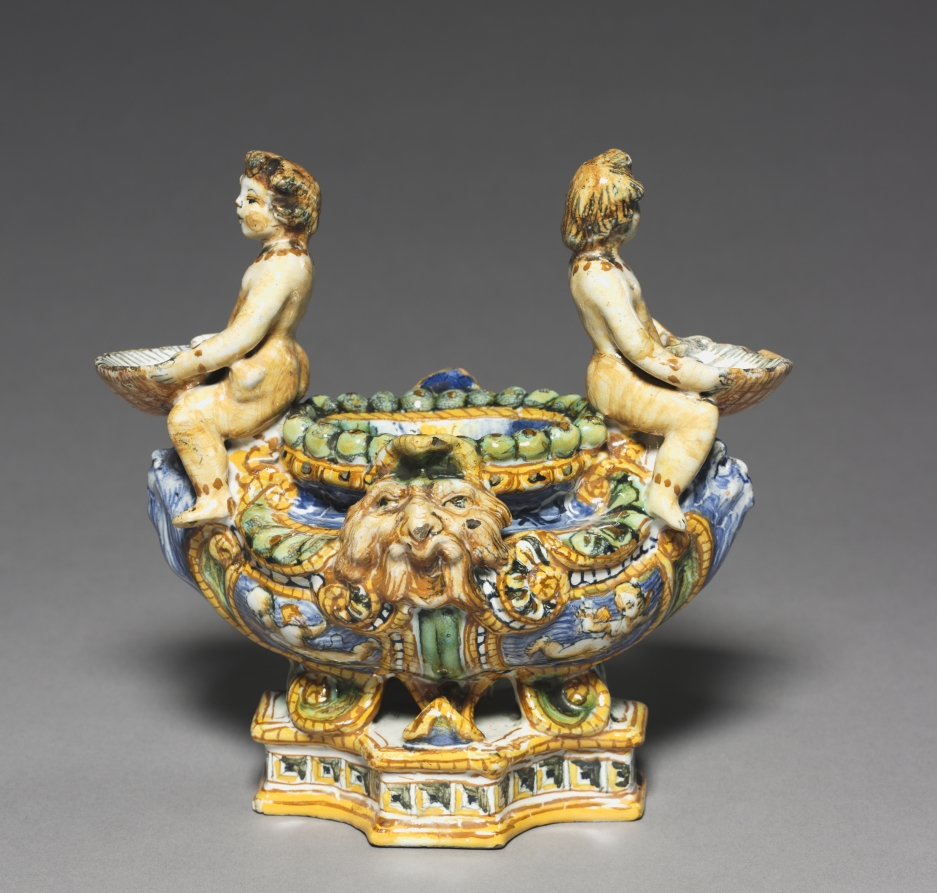
The museum identifies this ceramic as tin-glazed earthenware (maiolica) and credits the Patanazzi Family (Italian).
The museum's collection notes: During the Italian Renaissance of the 1400s and 1500s, nobles and merchants eager to express their wealth and sophistication ordered ceramics for dining, display, and storage. Known as maiolica, because it resembled the brightly colored ceramics from the Mediterranean island of Majorca, these ceramic vessels were covered with a tin glaze that provided an opaque white surface on which colorful decoration could be painted.