YOUR NEXT DISCOVERY/ArtifactsFollow your curiosity
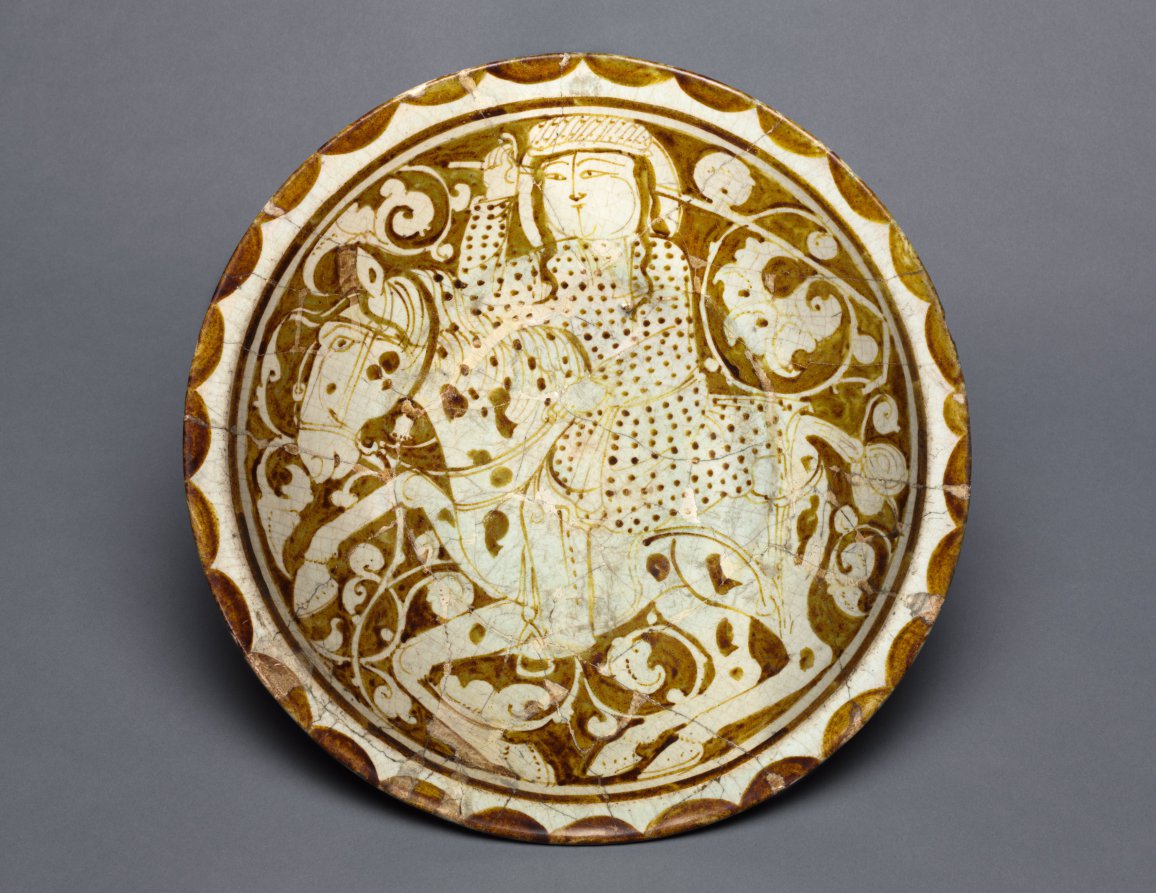
Luster Dish with Polo Player, from The Cleveland Museum of Art
The Cleveland Museum of Art · Open Access · Reuse terms

Iran, Seljuq period (1037–1194) / 1170–1200

Luster Dish with Polo Player

Luster Dish with Polo Player

The Cleveland Museum of Art catalogs Luster Dish with Polo Player as ceramic (Iran, Seljuq period (1037–1194) · 1170–1200).

Where fine clay was unavailable, potters made a paste out of ground quartz, clay, and glass. When fired, the paste created a compact white material called fritware that approximated the appearance of porcelain.

SERENDIPITYA little unexpected
FamiliarWeird

The museum identifies this ceramic as fritware with luster-painted design.

The museum's collection notes: Luster potters migrated to the city of Kashan in Iran where luster ware reached its greatest height during the 1170s until about 1220. This masterful dish features a mounted polo player, a figure representing the Iranian ideal of beauty with a round moon-like face and fine features.

The Cleveland Museum of ArtLuster Dish with Polo Player

Original explanation based on the sources above. Images carry their own reuse terms.