A CLOSER LOOK
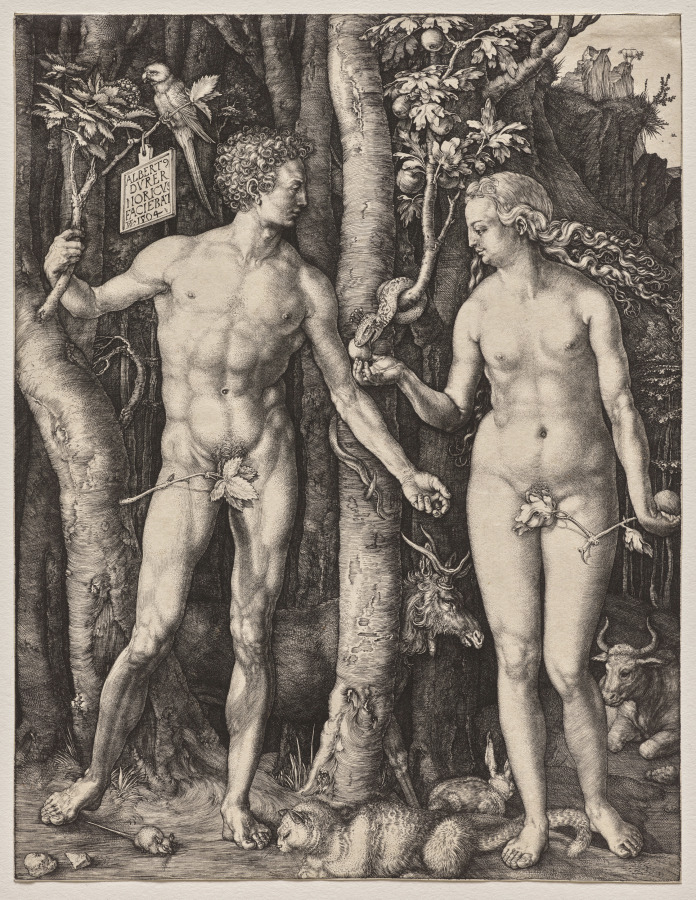
The museum identifies this print as engraving and credits Albrecht Dürer (German, 1471–1528).
The museum's collection notes: Albrecht Dürer’s iconic engraving was hugely impactful to the spread of natural symbolism in Europe. Drawing upon classical sculptural models, he represented Adam and Eve in perfect, uncorrupted beauty moments before tasting the forbidden fruit. The tree of knowledge, with its writhing serpent, is a fig tree, and the tree of life, which Adam clasps, is a mountain ash, native to Northern Europe. The elk, rabbit, cat, and ox are symbols of the four human temperaments—melancholic (gloomy), sanguine (sensual), choleric (cruel), and phlegmatic (slothful)—in perfect balance. But the cat and mouse hint at aggression to come, and the parrot, appearin