A CLOSER LOOK
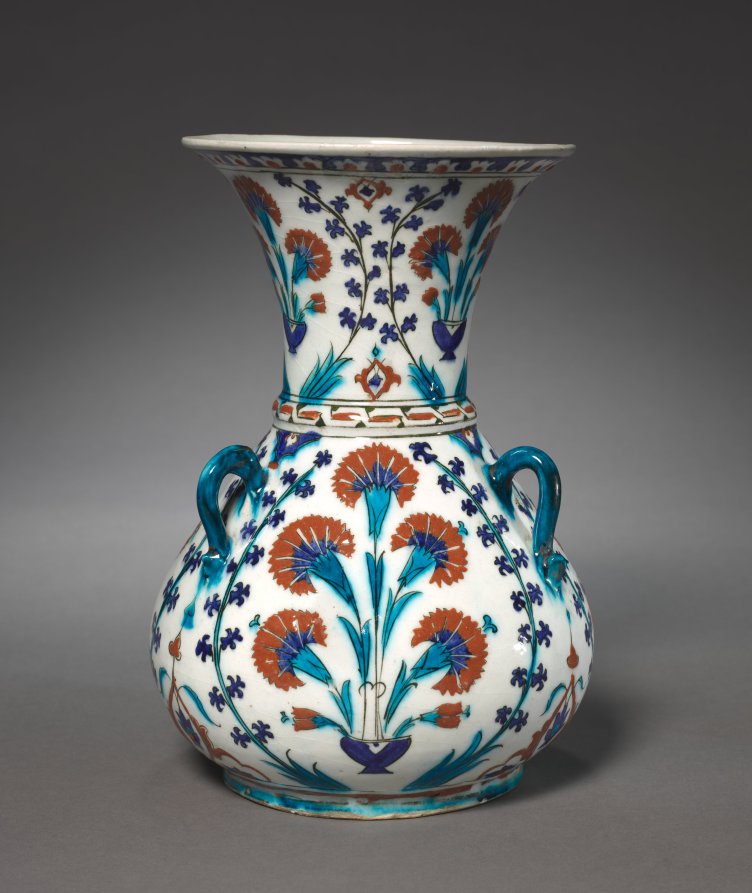
The museum identifies this ceramic as Fritware with underglaze design.
The museum's collection notes: Mosque lamps typically functioned as a lampshade, containing an oil lamp inside. Due to the opacity of this Ottoman lamp, it is likely that its primary function was not illumination. Instead, it would have been hung from chains in a mosque or mausoleum to add to the beauty of the space. This lamp is decorated with bright red carnations and blue hyacinths with additional floral and vegetal elements. The turquoise loops would have served for suspension from the ceiling. It is also possible that lamps like this were used as acoustic devices, softening the echo of prayer and discussion within the mosque’s halls.