YOUR NEXT DISCOVERY/ArtifactsFollow your curiosity
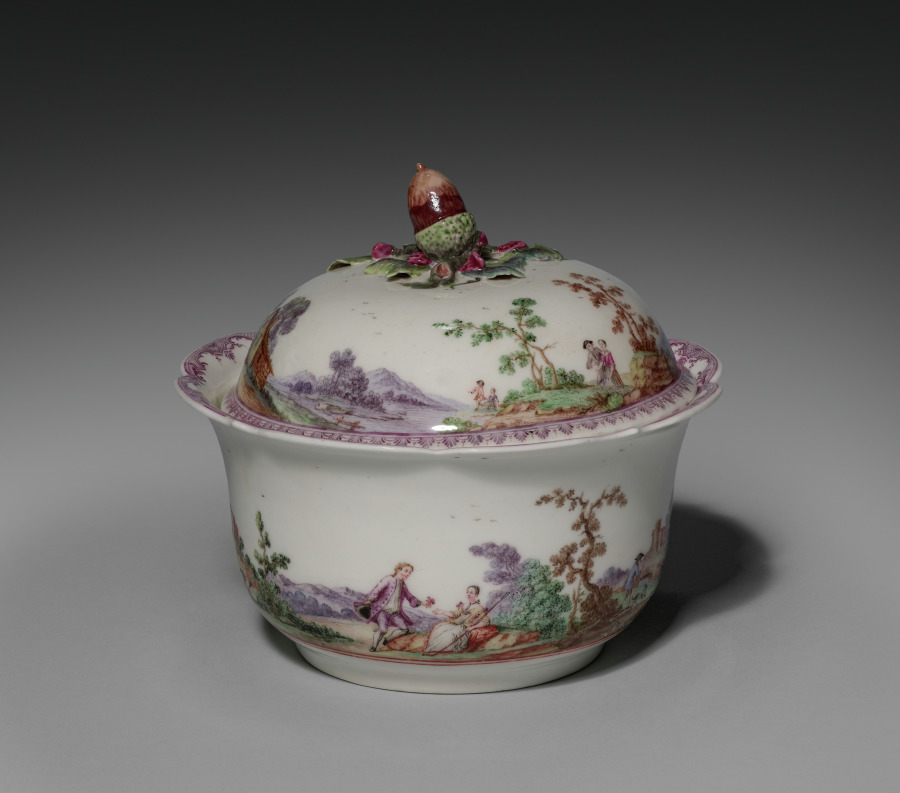
Covered Sugar Bowl (Pot à sucre), from The Cleveland Museum of Art
The Cleveland Museum of Art · Open Access · Reuse terms

France, Vincennes / 1745–48

Covered Sugar Bowl (Pot à sucre)

Covered Sugar Bowl (Pot à sucre)

The Cleveland Museum of Art catalogs Covered Sugar Bowl (Pot à sucre) as ceramic (France, Vincennes · 1745–48).

Three separate shades of purple, one of the most expensive colors to produce on porcelain during this time, are used extensively in this object’s paintings.

SERENDIPITYA little unexpected
FamiliarWeird

The museum identifies this ceramic as soft-paste porcelain with enamel decoration and credits Vincennes Porcelain Manufactory (French, 1740–1756).

The museum's collection notes: This covered bowl, likely intended for sugar, is one of the earliest surviving examples of Vincennes porcelain, a reputed French factory moved to Sèvres in 1756. The continuous landscape is painted on this object en pointillé , a method by which a painter forms images with tiny dots. This style may have been influenced by their German competitors at the Meissen Porcelain Factory.

The Cleveland Museum of ArtCovered Sugar Bowl (Pot à sucre)

Original explanation based on the sources above. Images carry their own reuse terms.