YOUR NEXT DISCOVERY/ArtifactsFollow your curiosity
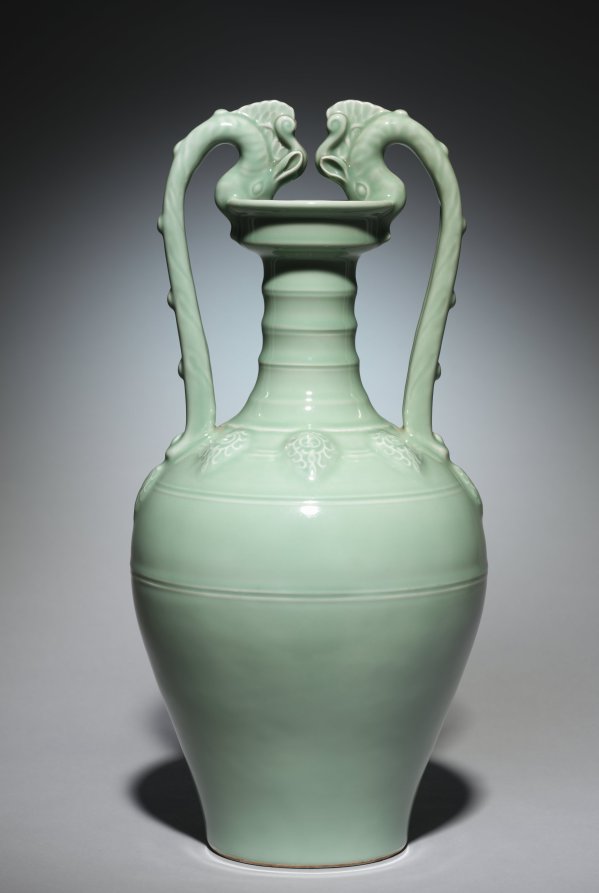
Amphora Vase, from The Cleveland Museum of Art
The Cleveland Museum of Art · Open Access · Reuse terms

China, Jiangxi Province, Jingdezhen, Qing dynasty (1644–1911), Yongzheng mark and period (1723–35) / 1723–35

Amphora Vase

Amphora Vase

The Cleveland Museum of Art catalogs Amphora Vase as ceramic (China, Jiangxi Province, Jingdezhen, Qing dynasty (1644–1911), Yongzheng mark and period (1723–35) · 1723–35).

The shape of the vase derives from Greece and was introduced to China via the Middle East.

SERENDIPITYA little unexpected
FamiliarWeird

The museum identifies this ceramic as porcelain with celadon glaze.

The museum's collection notes: This elegant vase, modeled in the shape of an amphora with dragon handles has perfect symmetry. Its celadon glaze is of exceptional purity and of subtle green color, all characteristics of classical Yongzheng-era monochrome porcelains. The amphora shape and dragon handles of this vase, seen earlier in the glazed stoneware of the Sui and Tang dynasties (581-907), were revived during the Yongzheng period for achieving "antique-elegance" ( guya ) in aesthetics as well as technical perfection in ceramic art. Only four vases of this size and glaze are known to exist.

The Cleveland Museum of ArtAmphora Vase

Original explanation based on the sources above. Images carry their own reuse terms.