YOUR NEXT DISCOVERY/ArtifactsFollow your curiosity
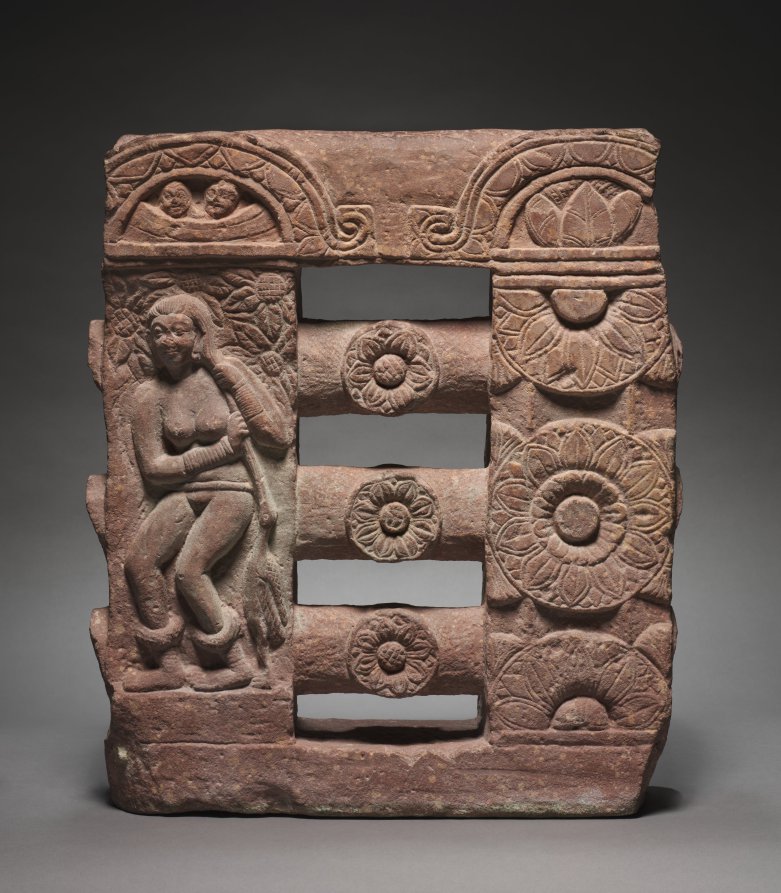
Section of Monolithic Railing with Bather and Lotus Medallions, from The Cleveland Museum of Art
The Cleveland Museum of Art · Open Access · Reuse terms

India, Mathura, Kushan period / c. 150–250 CE

Section of Monolithic Railing with Bather and Lotus Medallions

Section of Monolithic Railing with Bather and Lotus Medallions

The Cleveland Museum of Art catalogs Section of Monolithic Railing with Bather and Lotus Medallions as sculpture (India, Mathura, Kushan period · c. 150–250 CE).

In the windows above, carved on the coping stone, are two voyeurs and a bowl made of leaves filled with flower garlands, which would be used to adorn the sacred site.

SERENDIPITYA little unexpected
FamiliarWeird

The museum identifies this sculpture as red sandstone.

The museum's collection notes: Railings demarcated a sacred space, such as a tree shrine or a stupa. Images associated with purifying waters were carved on the railings, as if to symbolically cleanse those who passed through the gate. Under a fruit-bearing tree is a young woman squeezing water from her hair. In a visual depiction of an ancient Indian poetic trope, a goose mistakes the drops of water for pearls and comes to eat them.

The Cleveland Museum of ArtSection of Monolithic Railing with Bather and Lotus Medallions

Original explanation based on the sources above. Images carry their own reuse terms.