A CLOSER LOOK
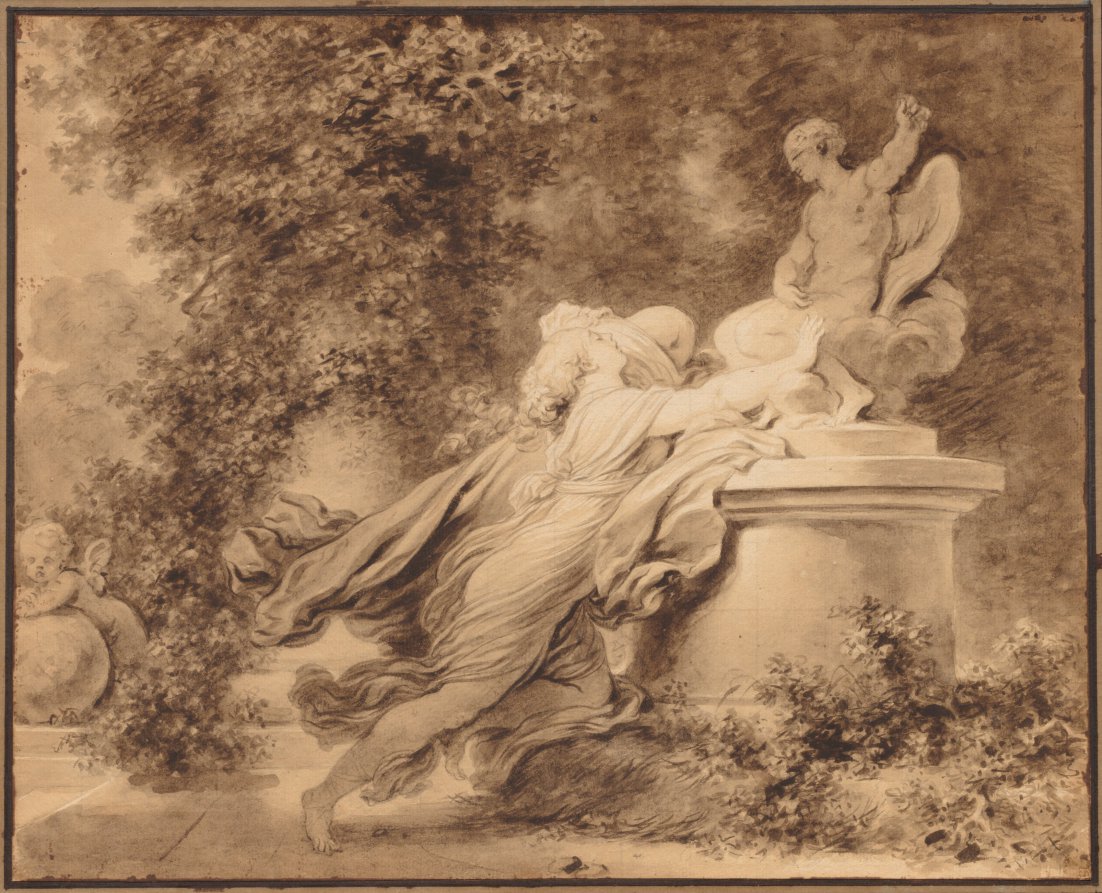
The museum identifies this drawing as Brush and brown wash with graphite squaring lines and underdrawing on cream laid paper and credits Jean-Honoré Fragonard (French, 1732–1806).
The museum's collection notes: Fragonard used gardens as the setting for love and courtship in some of his most important works. One such scene, this drawing depicts a woman pleading for help from a statue of Eros, the god of love. He wears a blindfold, suggesting an uncertain outcome for the woman, as does a Cupid who indifferently leans on an orb nearby. Like other artists in 18th-century France, Fragonard was deeply influenced by historic imagery of the Garden of Love—a pastoral and idyllic contained landscape. He revisited the specific image seen here multiple times, in two oil paintings (Musée du Louvre and private collection, New York) and another drawing (Princeton