A CLOSER LOOK
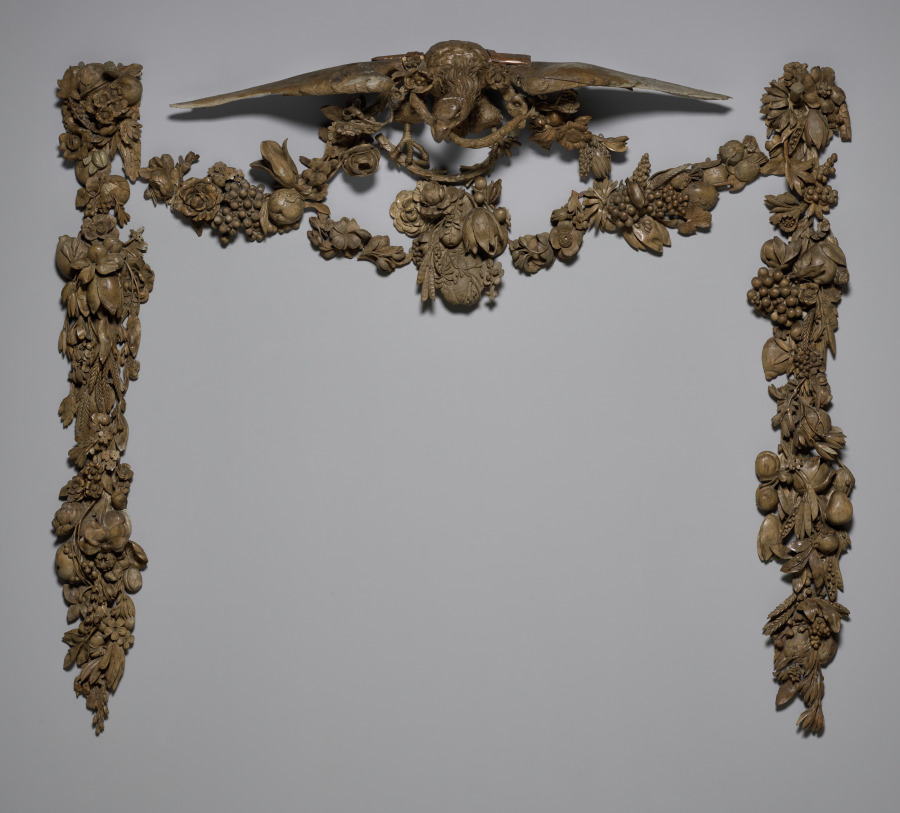
The museum identifies this sculpture as lindenwood and credits Grinling Gibbons (British, 1648–1721).
The museum's collection notes: The arrangement of architectural elements within grand interior spaces in the late 1600s and early 1700s emphasized symmetry and height. Decorative elements such as elaborately carved mantels, mirrors, paintings, and applied wall decorations were often stacked to achieve a visual focal point at one or both ends of the room. This particular overmantel decoration once hung above the fireplace in the Green Drawing Room of the Earl of Essex at Cassiobury in Watford, near London. In 1823, the British painter William Henry Hunt (1790–1864) produced a watercolor of the drawing room which featured this overmantel decoration. Grinling Gibbons was born