YOUR NEXT DISCOVERY/ArtifactsFollow your curiosity
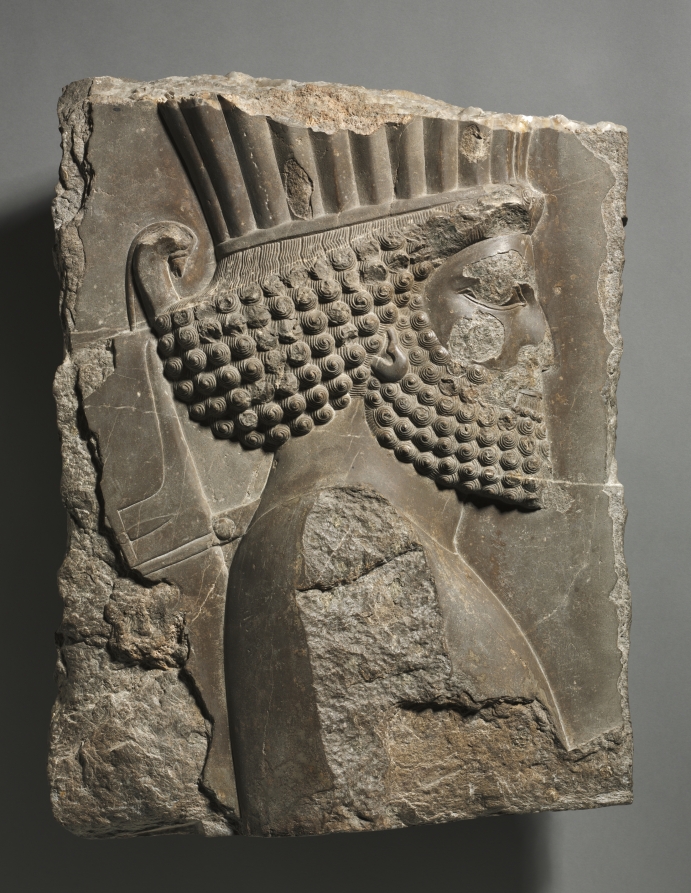
Fragment of a Wall Decoration from the Palace of Xerxes: "Guardsman" in Procession, from The Cleveland Museum of Art
The Cleveland Museum of Art · Open Access · Reuse terms

Iran, Achaemenid (550–330 BCE), Persepolis / 486–465 BCE

Fragment of a Wall Decoration from the Palace of Xerxes: "Guardsman" in Procession

Fragment of a Wall Decoration from the Palace of Xerxes: "Guardsman" in Procession

The Cleveland Museum of Art catalogs Fragment of a Wall Decoration from the Palace of Xerxes: "Guardsman" in Procession as sculpture (Iran, Achaemenid (550–330 BCE), Persepolis · 486–465 BCE).

This relief was probably once brightly painted.

SERENDIPITYA little unexpected
FamiliarWeird

The museum identifies this sculpture as gray limestone.

The museum's collection notes: In 486 BC, Xerxes succeeded Darius I as king of Persia. His empire, then the world’s largest and most powerful, encompassed an area from Libya to western India and from Ethiopia to Afghanistan. This relief fragment of one of his guards probably comes from the west stairway of his enormous palace at Persepolis. As chronicled by Herodotus, the Greeks defeated Xerxes in a clash of conflicting political systems: democracy and monarchy.

The Cleveland Museum of ArtFragment of a Wall Decoration from the Palace of Xerxes: "Guardsman" in Procession

Original explanation based on the sources above. Images carry their own reuse terms.