YOUR NEXT DISCOVERY/ArtifactsFollow your curiosity
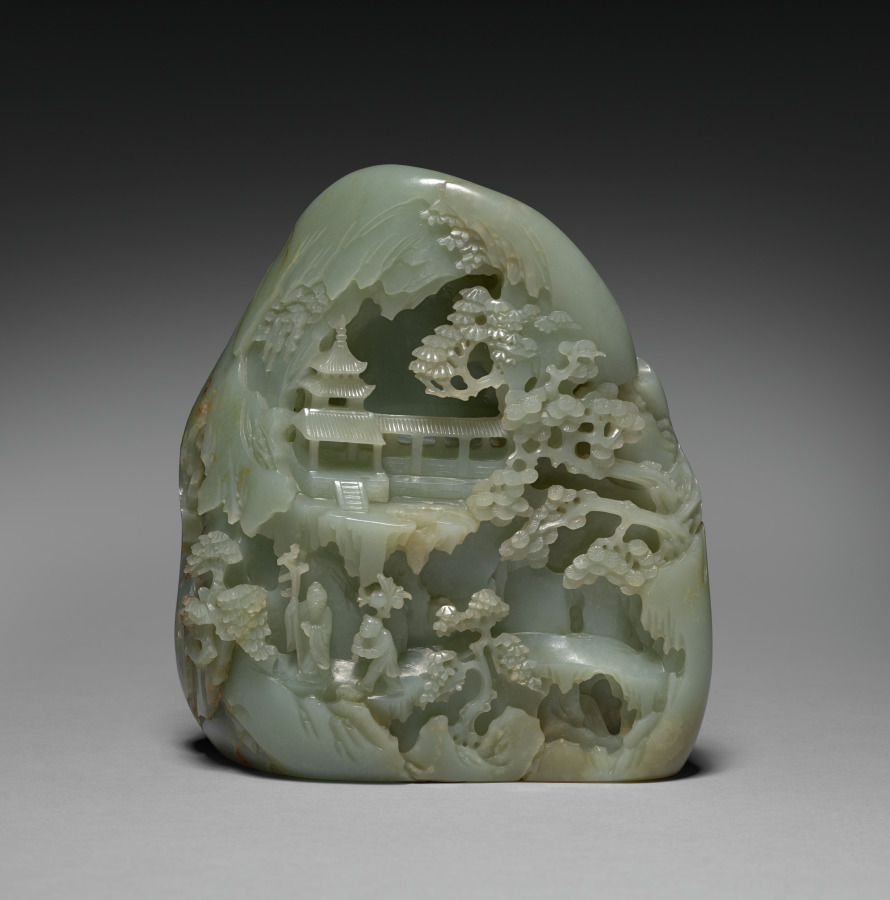
Miniature Mountain with Daoist Paradise, from The Cleveland Museum of Art
The Cleveland Museum of Art · Open Access · Reuse terms

China, Qing dynasty (1644–1911), Qianlong reign (1736–95) / 1736–95

Miniature Mountain with Daoist Paradise

Miniature Mountain with Daoist Paradise

The Cleveland Museum of Art catalogs Miniature Mountain with Daoist Paradise as jade (China, Qing dynasty (1644–1911), Qianlong reign (1736–95) · 1736–95).

The bearded immortal is accompanied by a servant carrying a cluster of peaches, symbols of immortality.

SERENDIPITYA little unexpected
FamiliarWeird

The museum identifies this jade as green jade with brown markings.

The museum's collection notes: Sizable jade boulders of mountainous landscapes were carved to represent the search for the paradise or immortals' dwellings in the mountains. This Daoist theme has fired the Chinese imagination throughout history. Believed to have spiritual and magical properties, jade has long been used in tombs and intended for preserving the corporeal body and the soul in the quest for eternity. It is recorded that Daoist practitioners drank morning dews with scraps of jade as an elixir of immortality.

The Cleveland Museum of ArtMiniature Mountain with Daoist Paradise

Original explanation based on the sources above. Images carry their own reuse terms.