YOUR NEXT DISCOVERY/ArtifactsFollow your curiosity
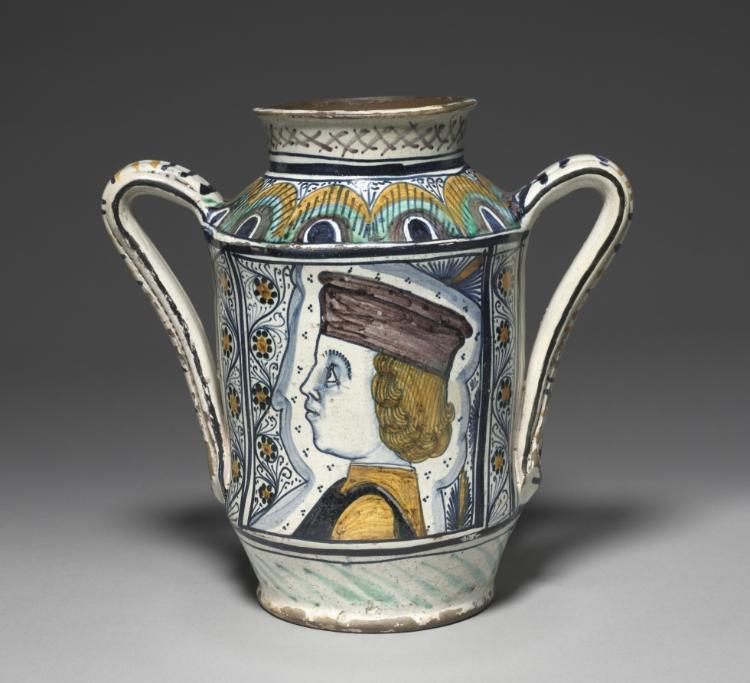
Pharmacy Jar (Albarello), from The Cleveland Museum of Art
The Cleveland Museum of Art · Open Access · Reuse terms

Italy, Florentine region, Cafaggiolo / c. 1475–80

Pharmacy Jar (Albarello)

Pharmacy Jar (Albarello)

The Cleveland Museum of Art catalogs Pharmacy Jar (Albarello) as ceramic (Italy, Florentine region, Cafaggiolo · c. 1475–80).

At various points in history, medicinal peony compounds have been prescribed for dizziness, weakness, hysteria, jaundice, and kidney stones.

SERENDIPITYA little unexpected
FamiliarWeird

The museum identifies this ceramic as tin-glazed earthenware (maiolica).

The museum's collection notes: Storage jars that lined the shelves of Renaissance pharmacies often held medicinal herbs, spices, and ointments. Their shape made them easy to grasp while the flared lip allowed apothecaries to seal off the contents with parchment or cloth secured by a string. A scroll on the back of this vessel indicates that it may have once held a peony compound.

The Cleveland Museum of ArtPharmacy Jar (Albarello)

Original explanation based on the sources above. Images carry their own reuse terms.