YOUR NEXT DISCOVERY/ArtifactsFollow your curiosity
Cloth with Procession of Figures, from The Cleveland Museum of Art
The Cleveland Museum of Art · Open Access · Reuse terms

Central Andes, South Coast, Nasca people / 170 BCE–70 CE (radiocarbon date, 95% probability)

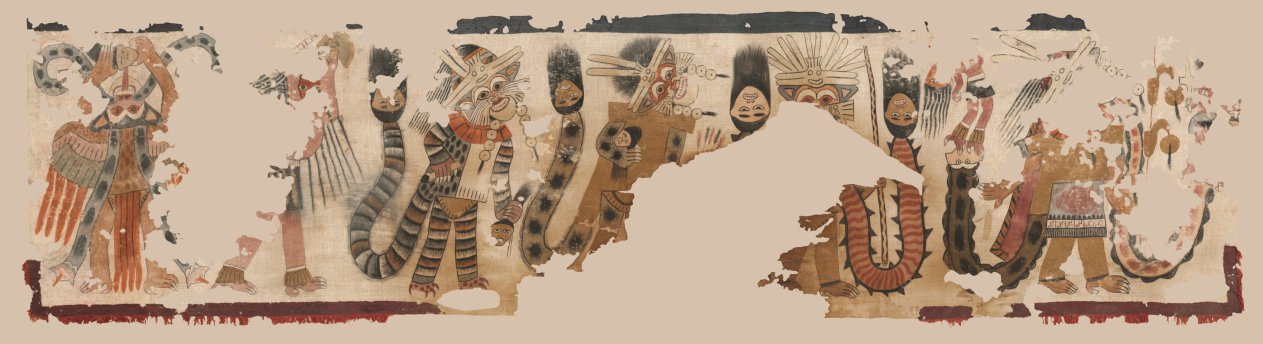
Cloth with Procession of Figures

Cloth with Procession of Figures

The Cleveland Museum of Art catalogs Cloth with Procession of Figures as textile (Central Andes, South Coast, Nasca people · 170 BCE–70 CE (radiocarbon date, 95% probability)).

Characteristics of the pampas cat and the emperor tamarin monkey are visible in the marching figures.

SERENDIPITYA little unexpected
FamiliarWeird

The museum identifies this textile as cotton and pigment (field); camelid fiber (borders and fringe).

The museum's collection notes: Experts agree that this cloth is one of the greatest paintings to survive from Andean antiquity due to the realism, complexity, large size, and refined execution of its figures. All but one of the figures wear the whiskered mouth mask of Nasca supernatural beings and several carry or wear severed human heads, which the Nasca linked to nature’s fruitfulness. Thus, the figures seem to represent supernatural forces or humans personifying such forces during a ritual devoted to agricultural fertility. Originally, the panel was attached along its upper edge to a dark blue cloth of equal size. The complete textile may have served as a mantle (a shaw

The Cleveland Museum of ArtCloth with Procession of Figures

Original explanation based on the sources above. Images carry their own reuse terms.