YOUR NEXT DISCOVERY/ArtifactsFollow your curiosity
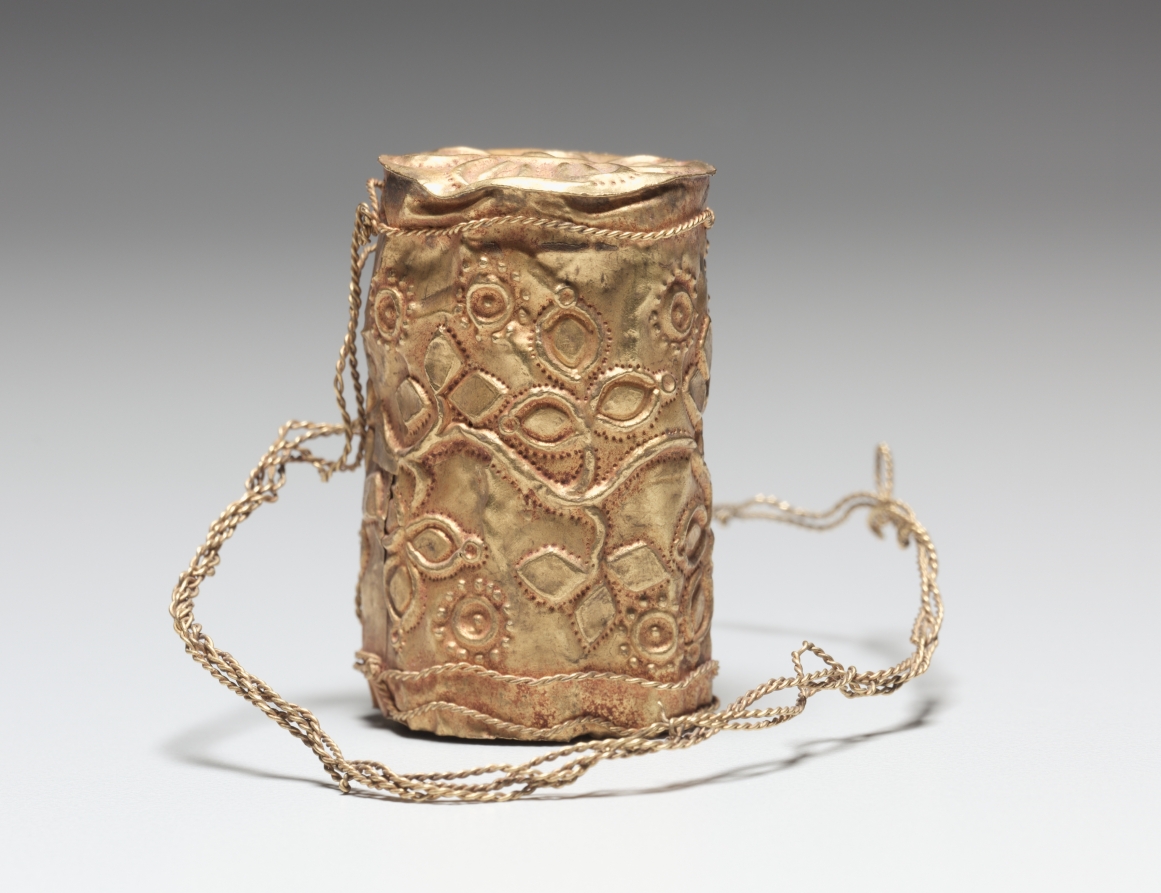
Knife Handle Cover, from The Cleveland Museum of Art
The Cleveland Museum of Art · Open Access · Reuse terms

Africa, West Africa, Ghana, Asante Empire/Kingdom, Kumasi or probably Kumasi, member of the goldsmit / 1800s

Knife Handle Cover

Knife Handle Cover

The Cleveland Museum of Art catalogs Knife Handle Cover as arms and armor (Africa, West Africa, Ghana, Asante Empire/Kingdom, Kumasi or probably Kumasi, member of the goldsmit · 1800s).

Only members of the goldsmiths' guild, who claimed descent from the first goldsmith Fusu Kwabi, could make gold ornaments for the royals and their entourage.

SERENDIPITYA little unexpected
FamiliarWeird

The museum identifies this arms and armor as Gold.

The museum's collection notes: Gold sheaths covered the cast iron blade of a king’s ceremonial knife ( sikay ), wrapping them with symbolism. In Akan states like the Asante Kingdom, gold embodies life force ( kra ) and is the sun’s earthly counterpart. Only goldsmiths’ guild members could make gold ornaments for the royals and their entourage, or for the royal treasury. Here, the goldsmith used a tool to push the raised floral, leaf, and geometric designs from the back of a soft sheet of gold (repoussé technique). Small dots outlining some motifs were punched into the metal. Similarly decorated gold sheets and solid ornaments capped a knife’s handle.

The Cleveland Museum of ArtKnife Handle Cover

Original explanation based on the sources above. Images carry their own reuse terms.