YOUR NEXT DISCOVERY/ArtifactsFollow your curiosity
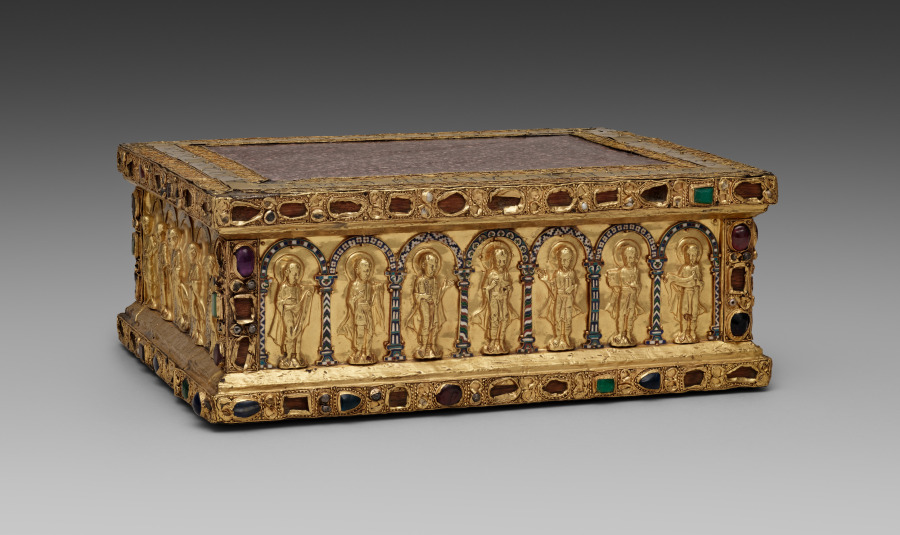
Portable Altar of Countess Gertrude, from The Cleveland Museum of Art
The Cleveland Museum of Art · Open Access · Reuse terms

Germany, Lower Saxony?, Romanesque period, 11th century / c. 1045

Portable Altar of Countess Gertrude

Portable Altar of Countess Gertrude

The Cleveland Museum of Art catalogs Portable Altar of Countess Gertrude as metalwork (Germany, Lower Saxony?, Romanesque period, 11th century · c. 1045).

On the bottom of this altar is a trap door that opened to reveal small relics of saints wrapped in silk.

SERENDIPITYA little unexpected
FamiliarWeird

The museum identifies this metalwork as gold, cloisonné enamel, porphyry, gems, pearls, niello, wood core.

The museum's collection notes: Commissioned by Countess Gertrude of Brunswick, this portable altar is one of the Guelph Treasure’s earliest and most sumptuous objects. The choice of white-speckled porphyry as the altar stone signals Gertrude’s worldly aspirations; an imperial color since classical antiquity, porphyry was only used by the imperial family. Historical figures of royal and imperial rank are depicted with Christ, the Virgin, apostles, and archangels along the altar’s sides, stressing the countess’s political ambitions and claim of imperial lineage for her own dynasty. The Latin inscription surrounding the altar stone reads, "Gertrude offers to Christ, to live j

The Cleveland Museum of ArtPortable Altar of Countess Gertrude

Original explanation based on the sources above. Images carry their own reuse terms.