A CLOSER LOOK
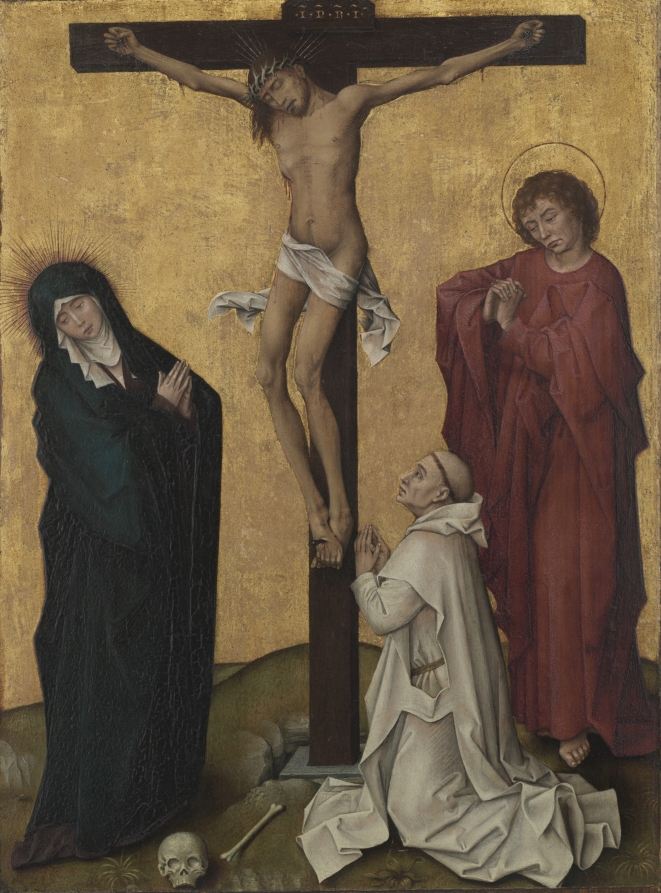
The museum identifies this painting as oil and gold on wood and credits Rogier van der Weyden (Flemish, c. 1399–1464).
The museum's collection notes: This painting shows a Carthusian monk kneeling in devotion and prayer before the Crucifixion. It is likely that this panel was intended for the cell of a monk in an unknown monastery. The Carthusians were particularly devoted to the Passion and Crucifixion of Christ, and devotional images were provided for each monk’s cell. The Carthusian order was founded by Saint Bruno in 1084 with the purpose of providing the strictest separation from the world. The first Carthusians were dedicated to contemplation through silence, prayer, poverty, penance, and almost continuous occupancy of a solitary cell. The solitary life could only be maintained throu