YOUR NEXT DISCOVERY/ArtifactsFollow your curiosity
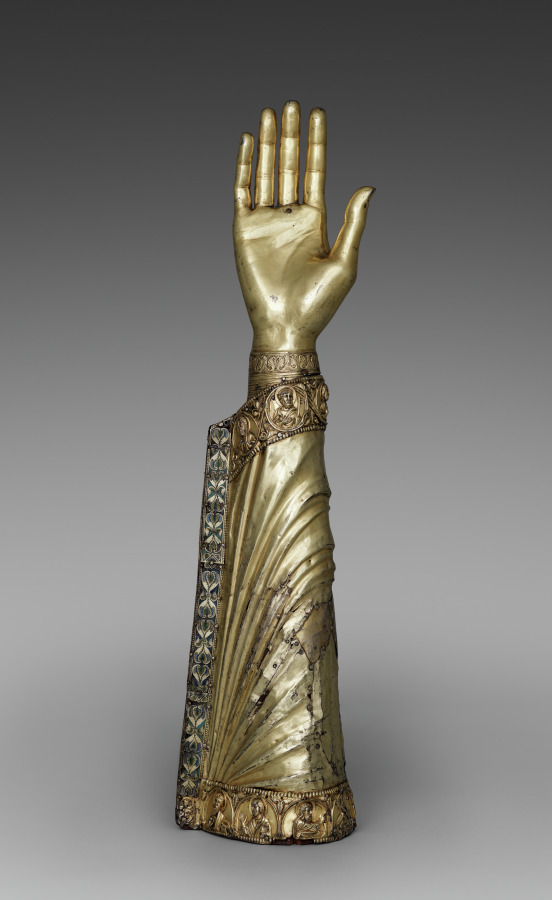
Arm Reliquary of the Apostles, from The Cleveland Museum of Art
The Cleveland Museum of Art · Open Access · Reuse terms

Germany, Lower Saxony, Hildesheim, Romanesque period, late 12th century / c. 1190

Arm Reliquary of the Apostles

Arm Reliquary of the Apostles

The Cleveland Museum of Art catalogs Arm Reliquary of the Apostles as metalwork (Germany, Lower Saxony, Hildesheim, Romanesque period, late 12th century · c. 1190).

Reliquaries were prized not for the opulence that you see, but for the items that they held. They enshrined items associated with saints, like a piece of clothing they wore or a small portion of their remains. In this case, an arm bone is encased within.

SERENDIPITYA little unexpected
FamiliarWeird

The museum identifies this metalwork as gilt silver, champlevé enamel, oak.

The museum's collection notes: Taking the form of a clothed lower arm with an outstretched hand, this reliquary from the Guelph Treasure appropriately enshrines a piece of an unidentified saint’s arm bone. Arm reliquaries like this one served as liturgical props; during religious services and processions, the clergy used them to bless and touch the faithful, thus making the presence of the saint more palpable and immediate. The apostle busts that decorate this arm reliquary seem to indicate that the relic it contains is that of an apostle. Duke Henry the Lion, a major patron of the church of Saint Blaise, is known to have received such relics from the Byzantine emperor Man

The Cleveland Museum of ArtArm Reliquary of the Apostles

Original explanation based on the sources above. Images carry their own reuse terms.