YOUR NEXT DISCOVERY/ArtifactsFollow your curiosity
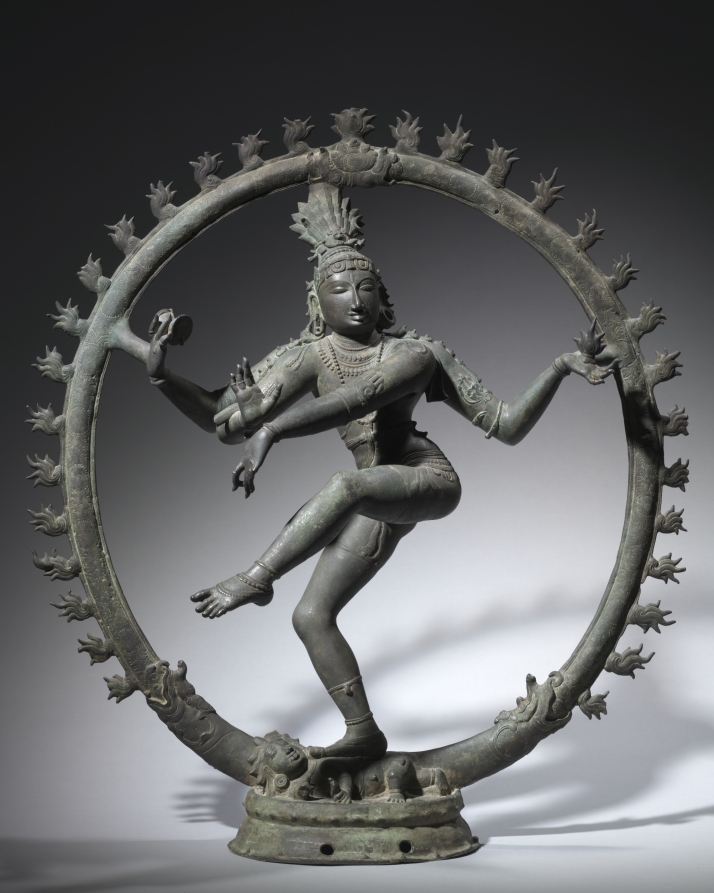
Nataraja, Shiva as the Lord of Dance, from The Cleveland Museum of Art
The Cleveland Museum of Art · Open Access · Reuse terms

South India, Tamil Nadu, Chola period (900–1200s) / 1000s

Nataraja, Shiva as the Lord of Dance

Nataraja, Shiva as the Lord of Dance

The Cleveland Museum of Art catalogs Nataraja, Shiva as the Lord of Dance as sculpture (South India, Tamil Nadu, Chola period (900–1200s) · 1000s).

The trampled figure holds a serpent in his left hand and with his right points up to Shiva.

SERENDIPITYA little unexpected
FamiliarWeird

The museum identifies this sculpture as Bronze.

The museum's collection notes: One of the most celebrated sculptural forms in the history of Indian art, this elegant and dynamic figure embodies some of Hinduism’s most fundamental tenets. According to Hindu thought, time is cyclical; the world is created, maintained, preserved for a time, then destroyed, only to be created again an infinite number of times. For those Hindus who view Shiva to be the all-powerful creator divinity, he is responsible for both creation and destruction. The ring of fire and the tongue of flame he holds in his left hand refer to destruction, and the drum in his raised right hand refers to the relentless beat of time as it moves inevitably forwa

The Cleveland Museum of ArtNataraja, Shiva as the Lord of Dance

Original explanation based on the sources above. Images carry their own reuse terms.