A CLOSER LOOK
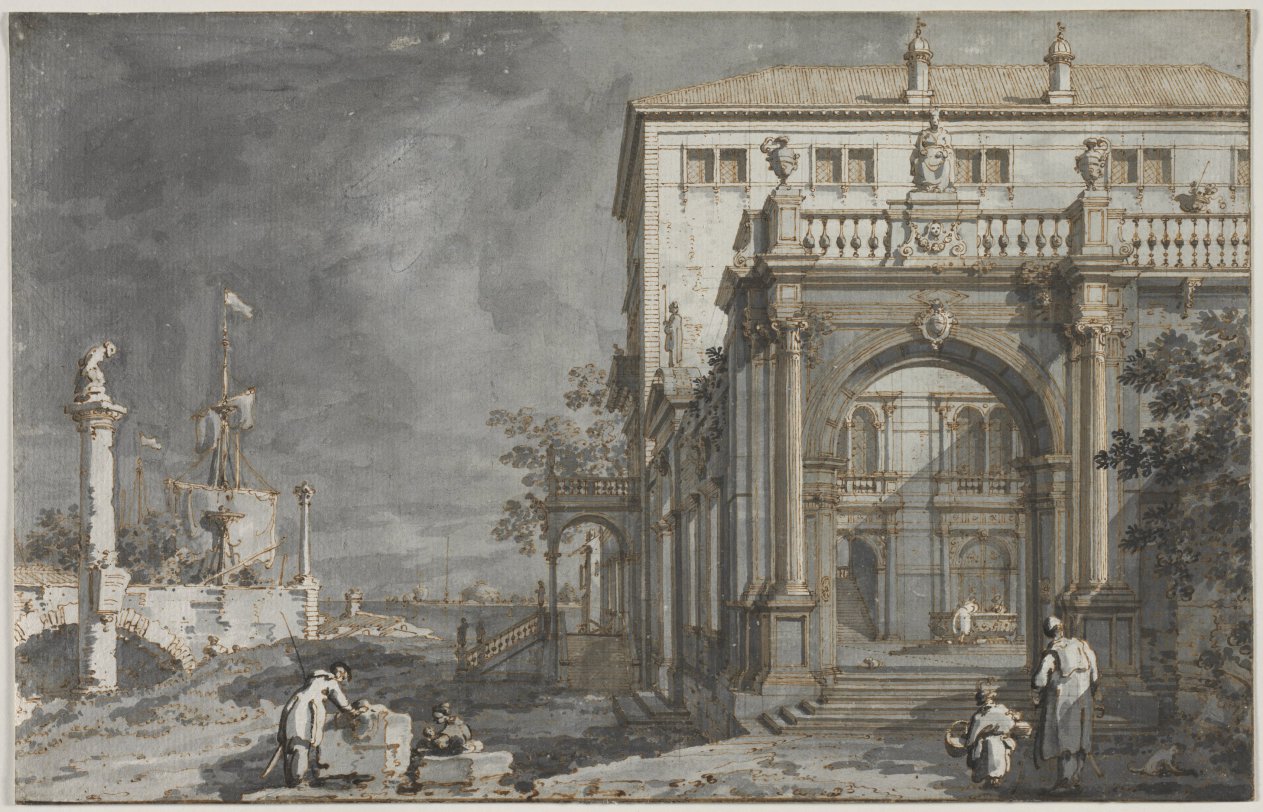
The museum identifies this drawing as pen and brown ink and brush and gray and black washes over traces of graphite (?); framing lines in pen and brown and black ink and credits Antonio Canaletto (Italian, 1697–1768).
The museum's collection notes: Privileged young Europeans embarking on the Grand Tour during the 1700s invariably visited Venice, where they purchased paintings, prints, and drawings to commemorate their trip. Canaletto’s vedute (view paintings) were particularly desirable as mementos of the city. This drawing is a capriccio —an artistic fantasy of architecture and landscape. Canaletto often referred to actual buildings in his capricci, manipulating and combining them to create his invented views. The palatial structure in this composition appropriates the neo-Palladian portal to the Palazzo Tasca in Venice; however, the lagoon, peasant figures, and architectural details a