YOUR NEXT DISCOVERY/ArtifactsFollow your curiosity
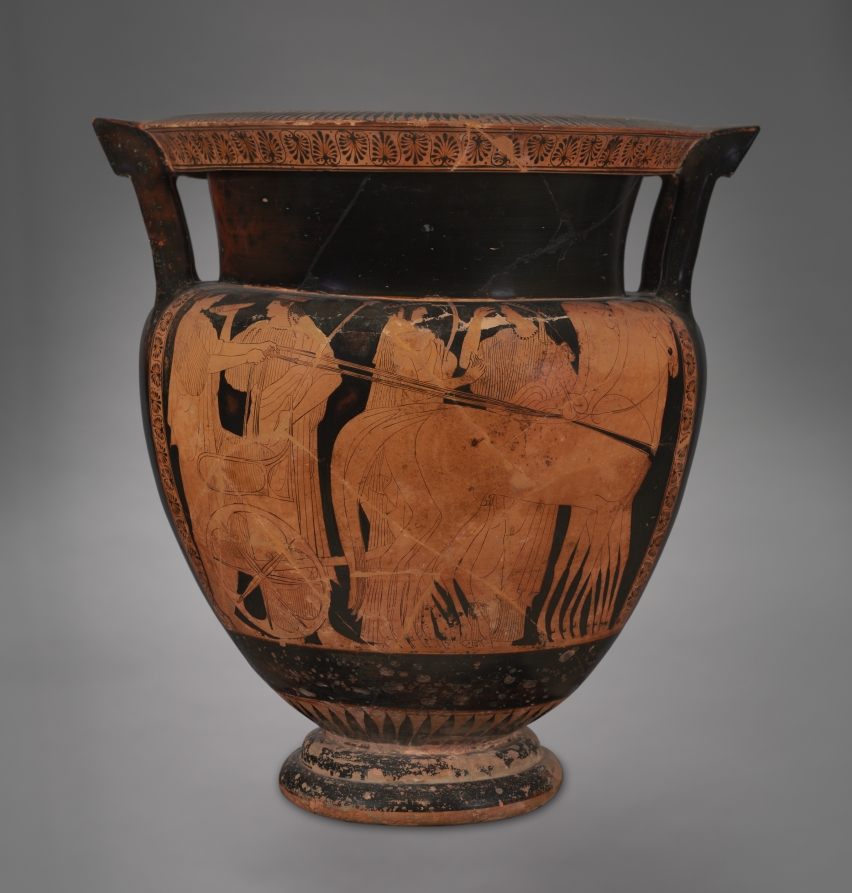
Red-Figure Column Krater (Mixing Vessel): Apollo and Goddesses with Chariot (A); Komos (Revel) (B), from The Cleveland Museum of Art
The Cleveland Museum of Art · Open Access · Reuse terms

Greek, Attic / c. 470–460 BCE

Red-Figure Column Krater (Mixing Vessel): Apollo and Goddesses with Chariot (A); Komos (Revel) (B)

Red-Figure Column Krater (Mixing Vessel): Apollo and Goddesses with Chariot (A); Komos (Revel) (B)

The Cleveland Museum of Art catalogs Red-Figure Column Krater (Mixing Vessel): Apollo and Goddesses with Chariot (A); Komos (Revel) (B) as ceramic (Greek, Attic · c. 470–460 BCE).

The revelers on this vessel dance to the music of the barbiton , a stringed instrument associated with leisure and luxury.

SERENDIPITYA little unexpected
FamiliarWeird

The museum identifies this ceramic as ceramic and credits Cleveland Painter (name vase; Greek, Attic, active c. 470–460 BCE).

The museum's collection notes: Since this column-krater is the most important of 12 vases painted by a Greek artist whose name is unknown, the great English vase expert, Sir John D. Beazley, named him (or her) the Cleveland Painter, after our city. Other vases by the Cleveland Painter are now in New York, Vienna, Paris, and Copenhagen, as well as museums in Greece and Italy. The chariot scene on the main side of the vessel is a divine one, as indicated by the presence of Apollo, identified by his lyre and laurel wreath. With him are three goddesses, probably his sister Artemis (facing him), together with Hera (wearing a crown and holding a scepter and libation dish), and H

The Cleveland Museum of ArtRed-Figure Column Krater (Mixing Vessel): Apollo and Goddesses with Chariot (A); Komos (Revel) (B)

Original explanation based on the sources above. Images carry their own reuse terms.