A CLOSER LOOK
The museum identifies this sculpture as Greek marble.
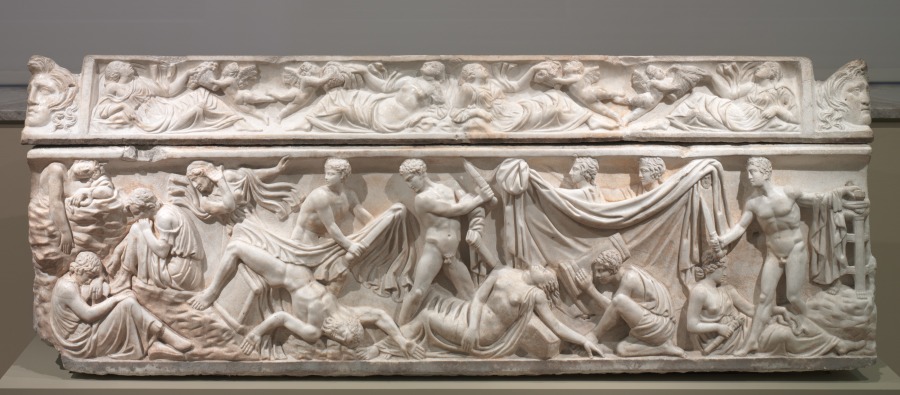
The museum's collection notes: The tragic figure Orestes appears three times on the front of this sarcophagus, always wielding a short sword. In the center he stands over the body of his mother Clytemnestra, and at center left over the body of her lover Aegisthus. Orestes has killed them both to avenge their murder of his father Agamemnon, upon his return from years of fighting at Troy. At the far left, three Furies (avenging spirits) rest upon Agamemnon's tomb, while at the far right, Orestes atones for the murders at the Delphian shrine of Apollo, marked by a tripod and rock. On the lid, four reclining women symbolize the seasons, arranged in right-to-left order: Winter,