YOUR NEXT DISCOVERY/ArtifactsFollow your curiosity
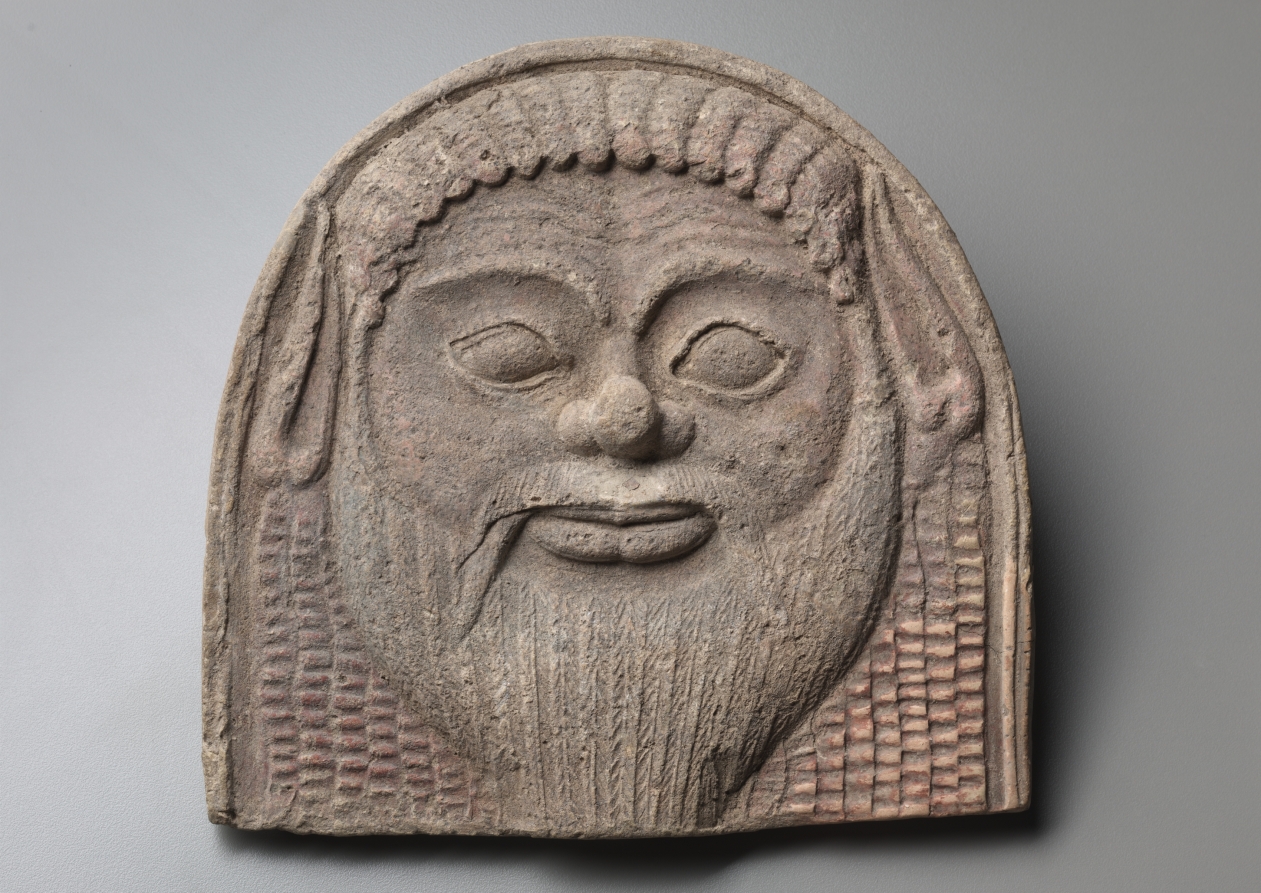
Antefix with Satyr Face, from The Cleveland Museum of Art
The Cleveland Museum of Art · Open Access · Reuse terms

Greek/South Italian, Taranto / c. 525–480 BCE

Antefix with Satyr Face

Antefix with Satyr Face

The Cleveland Museum of Art catalogs Antefix with Satyr Face as sculpture (Greek/South Italian, Taranto · c. 525–480 BCE).

Despite the connections between satyrs and Dionysos, not all satyr-head antefixes belonged to Dionysian buildings.

SERENDIPITYA little unexpected
FamiliarWeird

The museum identifies this sculpture as terracotta.

The museum's collection notes: This frontal satyr face, easily recognized by its snub nose and equine ears, served numerous purposes. As an antefix, it capped the open end of a roof tile, preventing wind, water, and pests from entering the building below. With its naturalistic mold-made features, enhanced with pigment and perhaps additional stamped and carved details, the antefix would also have provided striking visual ornament, especially when seen in long rows high above.

The Cleveland Museum of ArtAntefix with Satyr Face

Original explanation based on the sources above. Images carry their own reuse terms.