YOUR NEXT DISCOVERY/ArtifactsFollow your curiosity
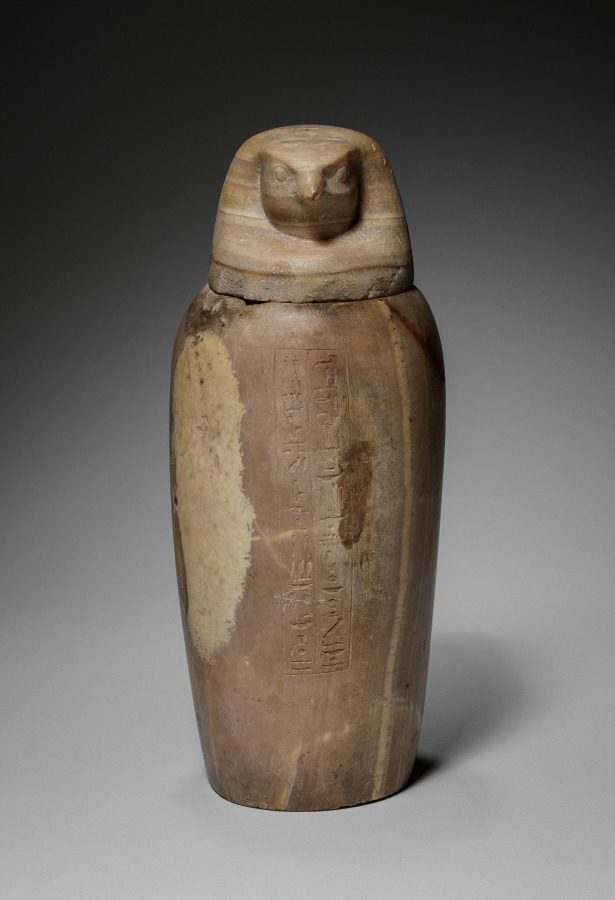
Canopic Jar with Falcon's Head, from The Cleveland Museum of Art
The Cleveland Museum of Art · Open Access · Reuse terms

Egypt, Late period (715–332 BCE), Dynasty 26 / 664–525 BCE

Canopic Jar with Falcon's Head

Canopic Jar with Falcon's Head

The Cleveland Museum of Art catalogs Canopic Jar with Falcon's Head as funerary equipment (Egypt, Late period (715–332 BCE), Dynasty 26 · 664–525 BCE).

The falcon-headed deity Qebehsenuef protected the contents of this canopic jar. It contained the remains of the deceased's intestines, which were kept safe for the afterlife.

SERENDIPITYA little unexpected
FamiliarWeird

The museum identifies this funerary equipment as travertine.

The museum's collection notes: In the process of mummification, the liver, lungs, stomach, and intestines were removed, separately embalmed, and stored in specialized jars known as canopic jars (after a sailor in Greek mythology, who died at the town of Canopus in the Nile Delta and was worshipped there in the form of a human-headed jar). Each organ was identified with one of four funerary deities collectively known as the Sons of Horus: the liver with Imsety (man's head), the lungs with Hapy (baboon's head), the stomach with Duamutef (jackal's head), and the intestines with Qebehsenuef (falcon's head). It was their duty to protect the deceased and restore to him his body

The Cleveland Museum of ArtCanopic Jar with Falcon's Head

Original explanation based on the sources above. Images carry their own reuse terms.