YOUR NEXT DISCOVERY/ArtifactsFollow your curiosity
Vulture Headdress Inlay, from The Cleveland Museum of Art
The Cleveland Museum of Art · Open Access · Reuse terms

Egypt, Greco-Roman period (332 BCE–395 CE), Ptolemaic dynasty (305–30 BCE) / 100–1 BCE

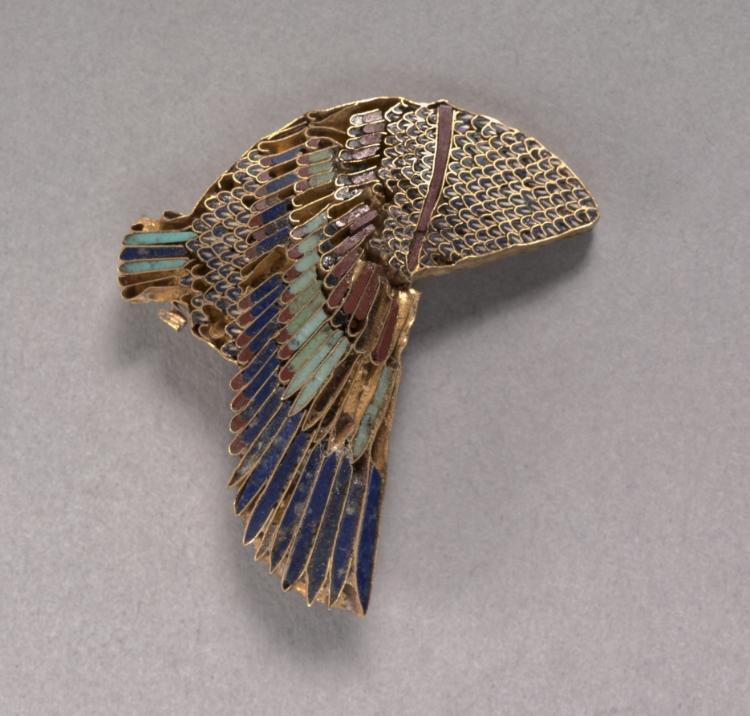
Vulture Headdress Inlay

Vulture Headdress Inlay

The Cleveland Museum of Art catalogs Vulture Headdress Inlay as jewelry (Egypt, Greco-Roman period (332 BCE–395 CE), Ptolemaic dynasty (305–30 BCE) · 100–1 BCE).

When creating this headdress, artisans used numerous semiprecious stones with inset partitions to keep them separate. To ensure that the stones would stay in place, a resin-like material was used as an adhesive.

SERENDIPITYA little unexpected
FamiliarWeird

The museum identifies this jewelry as gold and semi-precious stones.

The museum's collection notes: The vulture headdress was worn by goddesses and queens. This inlay in the form of a vulture headdress has more than 100 stones: lapis lazuli (dark blue), turquoise (light blue), petrified wood (red), and an unidentified white stone painstakingly cut to shape and separated by thin plates of gold. Body, wing, and tail feathers are carefully distinguished in minute detail.

The Cleveland Museum of ArtVulture Headdress Inlay

Original explanation based on the sources above. Images carry their own reuse terms.