YOUR NEXT DISCOVERY/ArtifactsFollow your curiosity
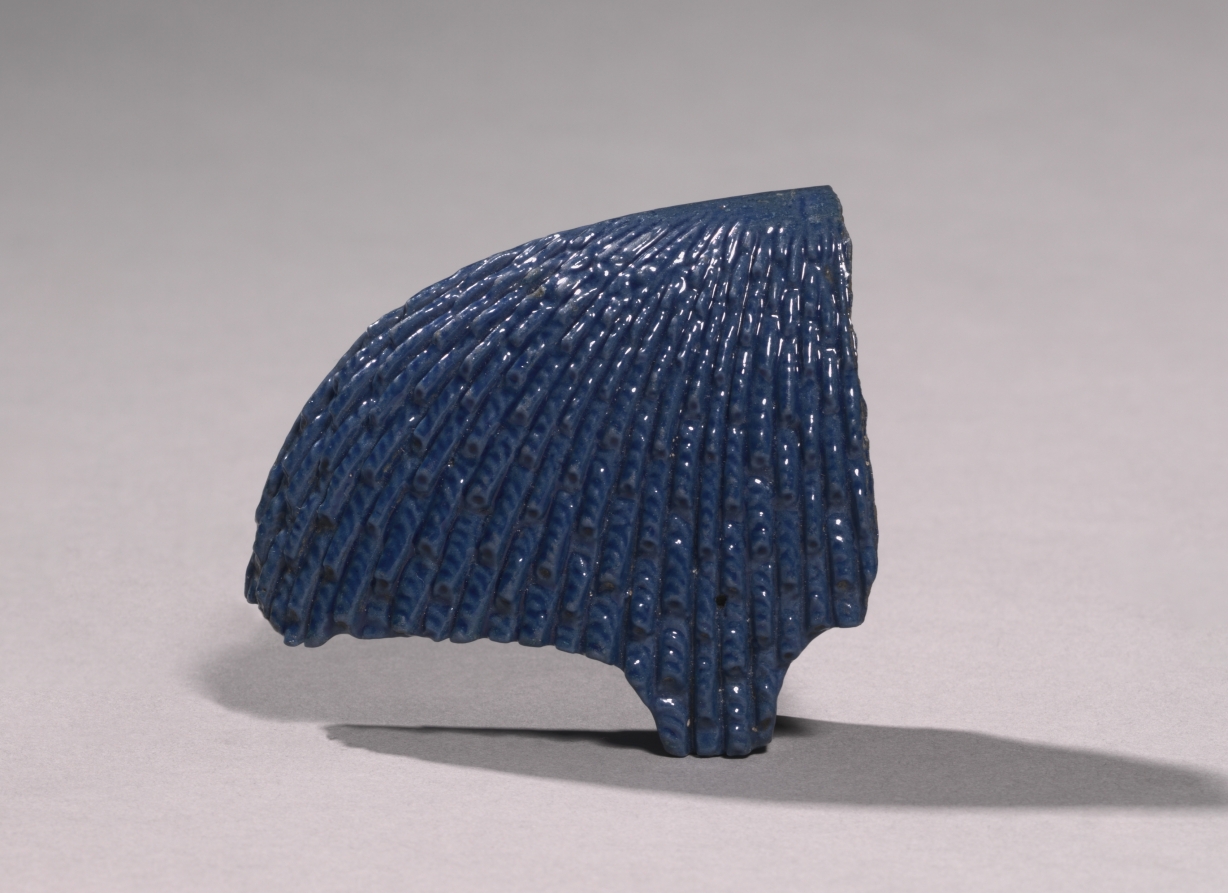
Fragment of an Inlay Headdress, from The Cleveland Museum of Art
The Cleveland Museum of Art · Open Access · Reuse terms

Egypt, New Kingdom (1540–1069 BCE), Dynasty 18 / c. 1353–1295 BCE

Fragment of an Inlay Headdress

Fragment of an Inlay Headdress

The Cleveland Museum of Art catalogs Fragment of an Inlay Headdress as ceramic (Egypt, New Kingdom (1540–1069 BCE), Dynasty 18 · c. 1353–1295 BCE).

It has been suggested that this fragment was part of a headdress that belonged to a queen. The fine, carved details of this headdress attest to the great skill of its maker and the luster of the blue lapis lazuli faience would have been appropriate for Egyptian royalty.

SERENDIPITYA little unexpected
FamiliarWeird

The museum identifies this ceramic as lavender blue faience with deep blue overglaze.

The museum's collection notes: This fragment is part of the curled headdress of an inlay figure, probably of a queen, assembled of various materials fit together like the pieces of a jigsaw puzzle. The front part of the headdress (directly over the forehead) is to the left, followed by the ear tab and part of the cutout above the ear. The luster of the faience is marvelously preserved. Blue, primarily associated with lapis lazuli, was an appropriate color for kings' and gods' hair and was part of the apparatus signaling them as otherworldly beings.

The Cleveland Museum of ArtFragment of an Inlay Headdress

Original explanation based on the sources above. Images carry their own reuse terms.